
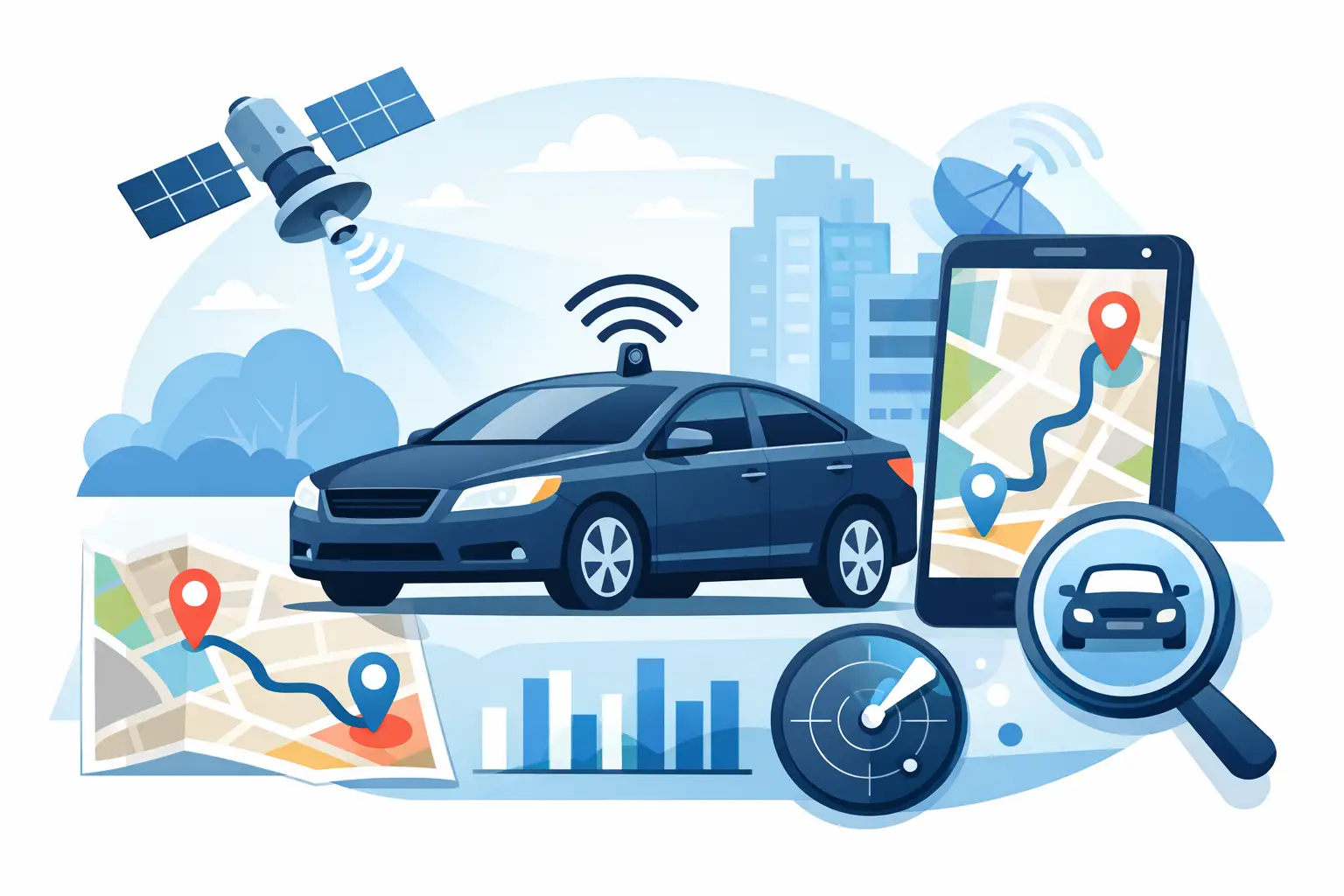
A vehicle goes missing, a driver misses a stop, or a trailer leaves a yard after hours. In those moments, the question becomes very practical, very fast: what is car gps tracking device technology, and how can it help you see what is happening right now? For consumers, fleets, and investigators, the answer is simple. It is a tool that gives you location visibility, movement history, and a stronger level of control over vehicles that matter.
What Is a Car GPS Tracking Device?
A car GPS tracking device is a piece of hardware installed in or placed on a vehicle that uses GPS signals to determine location and then sends that information to software you can view on a phone, tablet, or computer. In plain terms, it tells you where a car is, where it has been, and in many cases how it is being used.
The device itself is only part of the system. Most tracking setups also include cellular connectivity or another method of transmitting data, plus an app or web dashboard where the user sees live maps, trip history, alerts, and status updates. That is why people often think of GPS tracking as a single product when it is really a combination of hardware, software, and service.
How car GPS tracking device systems work
At the most basic level, the device receives signals from GPS satellites to calculate its position. It then records that location and transmits it through a wireless network to a secure platform. When you open the app, you see the vehicle’s current or recent position.
That is the simple version. In practice, most devices also track time, speed, direction of travel, stops, and route history. Some models can report harsh braking, rapid acceleration, idle time, ignition status, or entry into and exit from specific zones. For a family car, that may be used for theft recovery or driver monitoring. For a business fleet, it can support dispatch, productivity, and driver accountability. For an investigator, it can provide movement patterns and timeline evidence.
How often the device updates depends on the hardware, settings, and service plan. Faster updates give you better visibility, but they may also affect battery life on portable units. That is one of the first trade-offs to understand.
The main types of car GPS tracking devices
Not every tracker fits every job. The right choice depends on how the vehicle is used, how discreet the device needs to be, and whether you want long-term monitoring or short-term deployment.
Plug-in trackers
These usually connect to the vehicle’s OBD-II port, which is commonly found under the dashboard in most cars made after 1996. They are easy to install and often provide extra vehicle data along with location tracking. For fleet managers or everyday drivers, they are a practical option because setup is fast.
The downside is visibility. A plug-in unit is not always the best choice if discretion matters.
Hardwired trackers
Hardwired devices connect directly to the vehicle’s electrical system. They are more secure, more permanent, and less obvious once installed. Businesses often prefer them for fleet vehicles because they are difficult to remove and can deliver reliable long-term tracking.
Installation takes more effort, though. Some users handle it in-house, while others prefer professional installation to avoid wiring issues.
Battery-powered trackers
These devices run on internal batteries and do not need to be physically connected to the vehicle’s power supply. That makes them useful for temporary monitoring, shared vehicles, trailers, and investigative work where flexibility matters.
Battery-powered units are convenient, but battery life becomes a real factor. A tracker set to report every few seconds will not last as long as one set to report less frequently.
Magnetic trackers
A magnetic tracker is usually a battery-powered device designed to attach to a metal surface on a vehicle. These are often used when fast, discreet placement is required. They can be highly effective, but placement matters. Poor placement can affect signal strength, security, or weather resistance.
What information can a GPS tracker show?
Most people start with location, but a good tracking system gives you more than a pin on a map. Depending on the device and plan, you may be able to see live tracking, route playback, stop locations, trip duration, speed history, geofence alerts, tamper alerts, and idle time.
For a business, those details can reveal wasted fuel, unauthorized use, or inefficient routing. For a consumer, they can help recover a stolen vehicle or keep tabs on a teen driver. For a private investigator, they can help establish patterns without relying on constant physical surveillance.
This is where the software matters as much as the hardware. A strong platform should present data clearly and let you act on it quickly. If the app is hard to use, the tracker becomes less useful no matter how good the hardware is.
Who uses car GPS tracking devices?
Car GPS tracking is used by a much wider group than many people assume. Vehicle owners use it for theft recovery and peace of mind. Parents use it to monitor driving habits and location. Companies use it to manage fleets, improve dispatching, reduce misuse, and support safety programs.
Investigators are another important user group. They often need discreet, dependable tracking tools that can document vehicle movement over time. In that setting, the hardware has to be reliable, the data has to be easy to review, and the system has to support real operational needs instead of adding friction.
That same need for practical performance is why many users look for systems that are easy to deploy nationwide and simple to monitor through a mobile app. Blue Chameleon Tracking is one example of a provider focused on that kind of real-world use.
What are the real benefits?
The biggest benefit is visibility. When you know where a vehicle is and how it is moving, decision-making gets easier. That applies whether you are protecting one car or managing fifty.
There are also secondary benefits that matter just as much over time. Businesses often reduce fuel waste and unnecessary mileage once driver behavior is visible. Dispatchers can make smarter route decisions. Owners of expensive vehicles or equipment gain another layer of protection. Investigators can spend less time guessing and more time working from actual movement data.
Still, the value depends on matching the system to the job. A low-cost tracker may be enough for basic location checks, but not for professional monitoring where update speed, durability, and reporting quality are critical.
What to look for before you buy
If you are comparing options, start with the basics. Ask how the device is powered, how often it reports, what network it uses, and how you will access the data. Then look at practical questions: Is installation simple? Is the app easy to understand? Does the service work nationwide? Are alerts customizable? Is the hardware built for the environment where it will be used?
Battery life is a major factor for portable devices. So is mounting security. For hardwired or plug-in trackers, think about whether you want a visible presence or a more discreet setup. For fleet use, reporting and dashboard usability may matter more than the smallest hardware size. For investigative use, discretion and reliability tend to move higher on the list.
It is also smart to ask about ongoing service. Many GPS tracking devices require a monthly subscription because the system needs cellular data and software access. A cheap device with poor service can cost more in frustration than a better-supported system.
Common misconceptions about GPS trackers
One common misunderstanding is that all GPS trackers are real-time. Some are, but “real-time” can mean different update intervals depending on the product. Another misconception is that every tracker works equally well in every condition. Signal quality, placement, battery level, and network coverage all affect performance.
People also assume installation is always complicated. That depends on the device. Some trackers are ready to use in minutes, while others are designed for permanent installation. Neither option is better across the board. It depends on whether your priority is convenience, concealment, durability, or long-term use.
Is a car GPS tracking device right for you?
If you need visibility into a vehicle’s location, movement, or usage, the answer is often yes. The bigger question is what kind of tracker fits your situation. A parent watching a teen driver, a contractor protecting work trucks, a fleet manager reducing downtime, and an investigator documenting travel patterns all need tracking, but not in the same way.
That is why the best approach is to define the job first. Do you need live tracking or periodic updates? Permanent installation or portable deployment? Basic location or detailed reporting? When you answer those questions, the device category becomes much clearer.
A car GPS tracking device is not just a gadget. It is a working tool for protection, accountability, and faster decisions. The right one should make your job easier, not more complicated. Start with your real need, choose a system built for that use, and you will get far more value than a map dot alone can offer.